You’re hauling a trailer, climbing a steep grade, or stuck in summer traffic, and suddenly the transmission temp light pops on — maybe with a message like “Transmission Hot” or just the gear-with-thermometer icon. Your stomach drops: is the transmission about to grenade? I’ve seen this too many times on F-150s, Silverados, and Rams — one ignored light can turn a $300 fluid flush into a $4,000+ rebuild. The good news? Most cases are fixable early if you act fast. This guide explains what the transmission temperature warning light really means, why it comes on, if it’s safe to drive, and step-by-step fixes for 2026 vehicles.
What Does the Transmission Temperature Warning Light Mean?
The transmission temperature light warns that your automatic transmission fluid is getting too hot — usually above 220–240°F (normal safe range: 175–200°F). Overheating breaks down fluid, reduces lubrication, causes clutch slippage, and can fry seals, bands, and solenoids. Modern trucks (Ford, Chevy, Ram) monitor this closely because towing/heavy loads generate massive heat. If ignored, it often triggers limp mode to protect the gearbox.
Common Causes of Transmission Temp Light On
From real shop data and owner forums (Reddit r/MechanicAdvice, Ford-Trucks, RamForum):
- Low or degraded transmission fluid — #1 cause. Fluid cools the transmission; low level = poor cooling. Burnt smell? Fluid oxidized from heat.
- Clogged or failed transmission cooler — especially in trucks/SUVs. Debris, bugs, or corrosion block airflow through the cooler (often in front of radiator).
- Heavy towing or overloading — trailers, boats, or stop-go traffic push temps over 240°F quickly.
- Faulty transmission temperature sensor — false readings (codes like P0711). Common on older Chevy/GMC 6L80/90 or Ford 10R80.
- Restricted lines, bad torque converter, or internal wear — rarer, but lead to chronic overheating.
“Transmission temp light came on towing my boat uphill. Pulled over, checked fluid — low. Topped off and added an auxiliary cooler — no more issues,” — Mike, 45, Ford F-150 2022 owner.
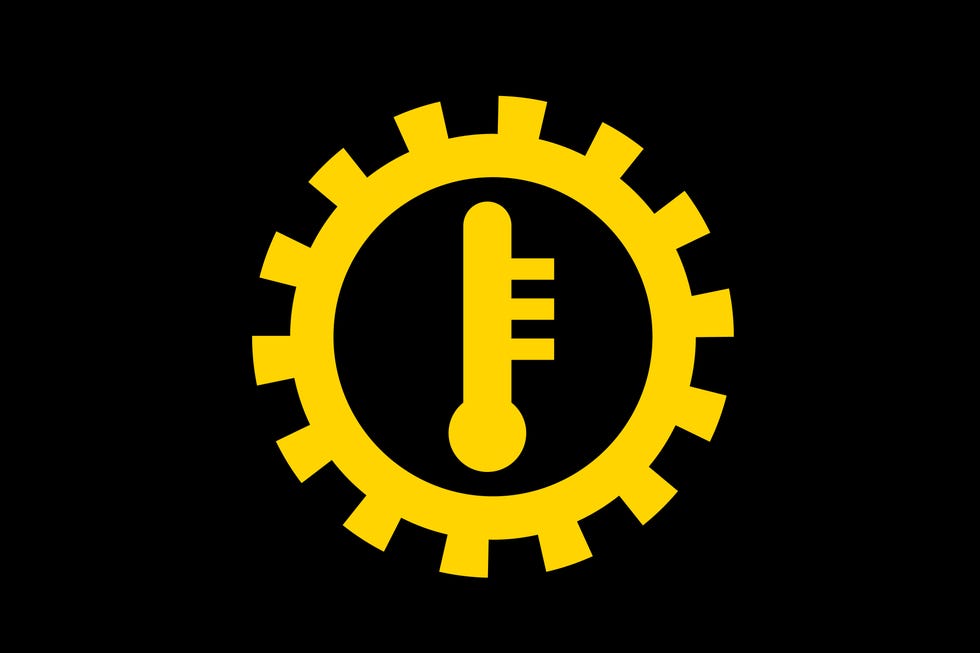
Typical transmission temperature light on the instrument panel — don’t ignore this one
Is It Safe to Drive with the Transmission Temp Light On?
Short answer: **No, not for long**. Pull over safely as soon as possible and let it cool (engine off 20–30 min). Driving further risks severe damage — burnt fluid, warped clutches, total failure. If it’s intermittent and temps drop after slowing, you might limp to a shop — but avoid highways/towing. Better safe than stranded with a $5k bill.
What to Do Immediately When the Light Comes On
- Pull over to a safe spot — reduce speed gradually, avoid hard acceleration.
- Turn off engine and let cool 20–45 minutes (monitor gauge if you have one).
- Check transmission fluid level (engine running, in Park, on level ground) — look for low, burnt (dark brown/black), or milky fluid.
- Inspect for leaks around cooler lines, pan, or seals.
- Scan for codes (OBD2 tool) — P0711 (temp sensor), P0218 (overtemp), etc.
- If safe to move — drive slowly to mechanic or home; no towing/heavy load.
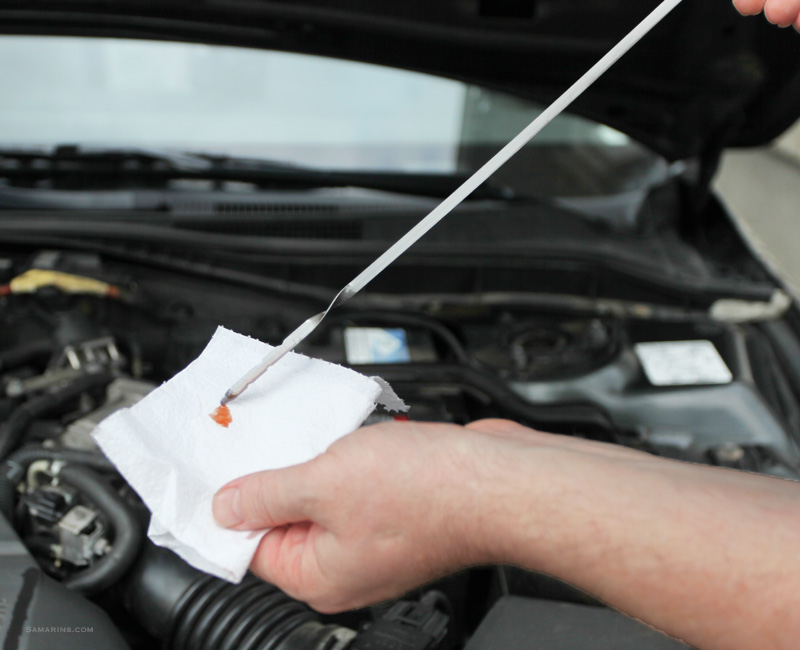
Checking transmission fluid level and condition — first step when temp light comes on
How to Fix Transmission Overheating (Costs 2026 US)
| Fix | DIY Cost | Shop Cost |
|---|---|---|
| Transmission fluid + filter change | $80–$150 | $200–$400 |
| Flush transmission cooler/lines | $50–$100 | $150–$300 |
| Auxiliary transmission cooler install | $150–$300 parts | $400–$800 |
| Temperature sensor replacement | $50–$120 | $150–$350 |
| Diagnostic scan + inspection | — | $100–$200 |
Most cases resolve with fluid service + cooler check. Add aux cooler for frequent towing — game-changer. If your transmission is already in limp mode from overheating, check our detailed guide on how to get your car out of limp mode.
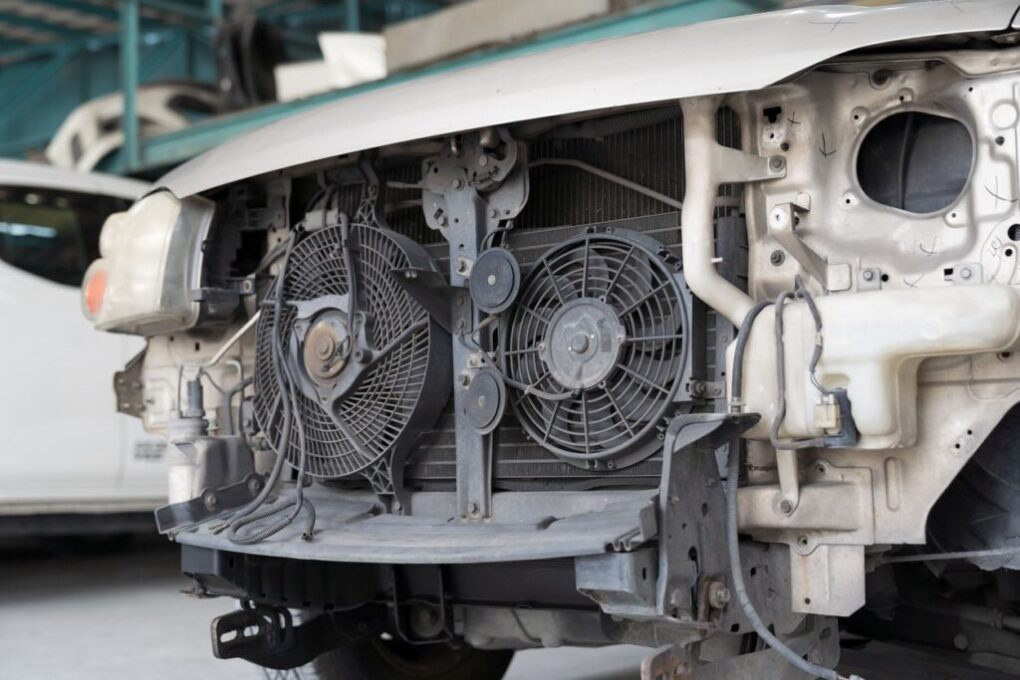
Transmission cooler — keeps fluid temps down, especially important for towing
Real Owner Experiences
“Light came on in traffic on my Silverado — turned out clogged cooler from bugs. Cleaned + fluid change, fixed for $250,” — John, Chevy owner.
Another: “Ignored it once — ended up in limp mode. Rebuild cost $4,200. Now I pull over every time.”
FAQ
Is it safe to drive with transmission temperature light on?
No — pull over and cool down ASAP. Continued driving risks major transmission damage from overheated fluid.
What causes transmission temperature light to come on?
Low/degraded fluid, clogged cooler, heavy towing, faulty temp sensor, or internal issues. Check fluid first.
How to reset transmission temperature warning light?
Fix the cause (fluid, cooler), then clear codes with OBD2 scanner or disconnect battery 10–15 min. It often resets after cooling/fixing.
Transmission temp light on while driving what to do?
Slow down, pull over safely, shut off engine to cool. Check fluid level/condition before restarting. Similar urgency as when the brake system warning light comes on — act fast.
Final Thoughts
The transmission temperature warning light is one of the most serious dashboard alerts — heat kills transmissions faster than anything. Act fast: pull over, cool down, check fluid, and address the root cause. Early fixes are cheap; ignoring it is expensive. If your light just came on (or pairs with other warnings), comment your make/model/year + symptoms — I’ll help pinpoint. Stay cool out there!